

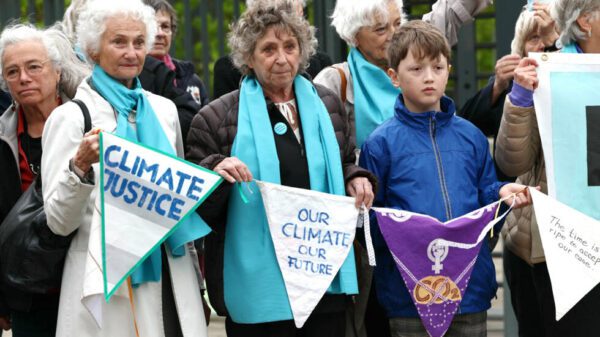
A group of 2500 women recently won a court ruling against the Swiss government for not implementing adequate policies to combat climate change. The women are all members of KlimaSeniorinnen Schweiz, which consists solely of female climate activists over the age of 64. The group has been fighting for this cause for the better half of a decade, with initial court procedures starting back in November 2016.
The ruling took place in the European Court of Human Rights (ECHR) in Strasbourg. As many similar cases are currently on the Court’s docket, this precedent could be particularly significant, setting off a domino effect of decisions.
The climate activists’ case was based on the argument that the Swiss government’s inaction regarding the implementation of policies intended to limit global warming below the two degrees Celsius level agreed on according to the Paris Agreement. They claim that the disregard for the set targets severely impacts their health; this was reinforced by the Intergovernmental Panel on Climate Change which insists senior women are disproportionately prone to heat-related medical issues. According to KlimaSeniorinnen, senior men and young children face those issues similarly, therefore arguing that their objective helps others as well as themselves.
The group had originally called on the government to take initiative and impose measures necessary to achieve greenhouse gas emissions reductions of at least 25% below 1990 levels by 2020, and at least 50% below those levels by 2050. These goals were rejected by Switzerland’s Federal Department of the Environment, Transport, Energy and Communications (DETEC) on 25 April 2017. The group’s appeal of the decision was rejected by the Swiss Federal Administrative Court seven months later. The group did not stop there, however, issuing another appeal with the Swiss Supreme Court in January 2019, but that appeal was identically discarded in May of the following year. Finally, the activists looked outside of the nation for help, and their perseverance bore fruit when the ECHR started processing their case.
The articles KlimaSeniorinnen referred to are the following:
In terms of the Swiss Convention:
- Article 10 (Right to Life)
- Article 73 (Sustainability Principle)
- Article 74 (Environmental Protection)
In terms of the European Court of Human Rights:
- Article 2 (Right to Life)
- Article 8 (Right to Respect for Private and Family Life)
- Article 13 (Right to an Effective Remedy)
With the last article, KlimaSeniorinnen refers to the lack of adequate resources the group had at its disposal to fight the case within its country’s borders.
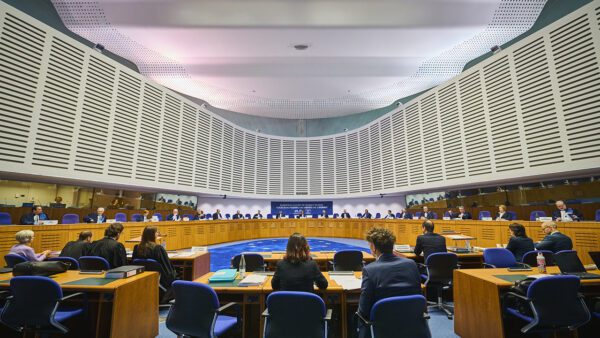
Since the Court found a breach of Article 8 of the Convention, the Swiss government is faced with a legal obligation to select and implement measures that address the issue. These measures are subject to supervision by the Committee of Ministers that ensures adequate action takes place. The country was also sentenced to pay 80,000 euros in court costs to KlimaSeniorinnen.
Seemingly a small and irrelevant case, this win could pose as a stepping stone to many similar cases throughout Europe and perhaps wider. In a time when climate change is becoming an increasingly ominous problem, we need people to take the initiative in this fashion and push for a concrete solution before it’s too late.
Cover Image: A climate protest organized by the KlimaSeniorinnen.