
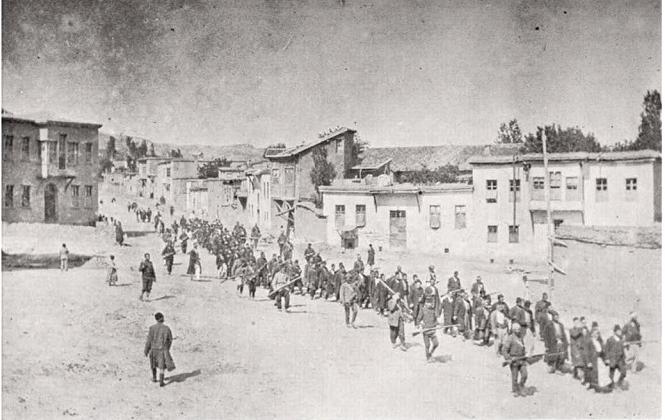
SEGOVIA – By a 405-11 vote made on the October 29th, the United States’ House of Representatives recognized the 1915 slaughter of about 1.5 million Armenians as a genocide, for the first time in over three decades.
It is not uncommon for the U.S. to meddle in foreign affairs. In fact, it was interesting that the first time a federal government branch advocated a political response to a humanitarian problem outside the Western Hemisphere, according to research done by Charlie Laderman of the Washington Post was in 1896. It was in response to the first Armenian massacre led by the Ottomans.
This recognition is long overdue – for them [the United States] to publicly act upon the genocide over a century later. However, one must not overlook the fact that there have been many factors that have inhibited the process of recognizing the massacre.
A primary reason for former presidents of the U.S. chose to remain uninvolved in this matter can be summed up in one quote stated by the 29th U.S. President, Warren Harding: “I am not insensible to the sufferings of Armenia… but I am thinking of America first.” With the Americans’ best interests in mind, or so they say, public condemnation of Turkey – who was Germany’s principal ally during that time – would have damaged the U.S.’s initial neutrality.
The situation, nonetheless, remained the same in more recent times, with their lack of recognition of the genocide being under the aim of preserving their relationship with Turkey; a NATO ally, that has denied the claims and disregarded them as historically inaccurate. Thus, supporting such a resolution would immediately place the U.S. in an uneasy position with Turkey. However, it seems now that this time, the roles have reversed.
On October 9th, Turkish troops began an invasion of the Kurds, following the withdrawal of American forces from Syria on October 6th. This was done out of the U.S.’s favor, with the Trump administration threatening with the imposition of economic sanctions on Turkey for attacks on the Kurds. These recent attacks have strained relations between both parties, acting as a stark reminder of the Armenians’ situation as said by Nancy Pelosi and allowed advocates of the recognition to step out of the shadows and speak up. Other perspectives from Turkey have contested this view, stating that it was clear the vote for the recognition of the Armenian Genocide was simply an act of revenge, according to a tweet made by Mevlut Cavusoglu, the foreign minister of Turkey.
Nevertheless, politics have intervened once again with a recent White House visit by Turkish President Erdogan, along with Senator Lindsey Graham. After the meeting, Graham blocked Senator Robert Menendez’s request for the unanimous consent of the Senate to recognize the Armenian Genocide. This did not necessarily kill the resolution, but rather elongated the process, and derailed Armenian hopes.
If one can learn one lesson from past events, it is that one should not sell the skin until they have caught the bear. The question therefore still remains whether the Armenian genocide will finally be recognized, or if a series of deferrals will prevail.
Views of this article